Mostrando entradas con la etiqueta Body Systems. Mostrar todas las entradas
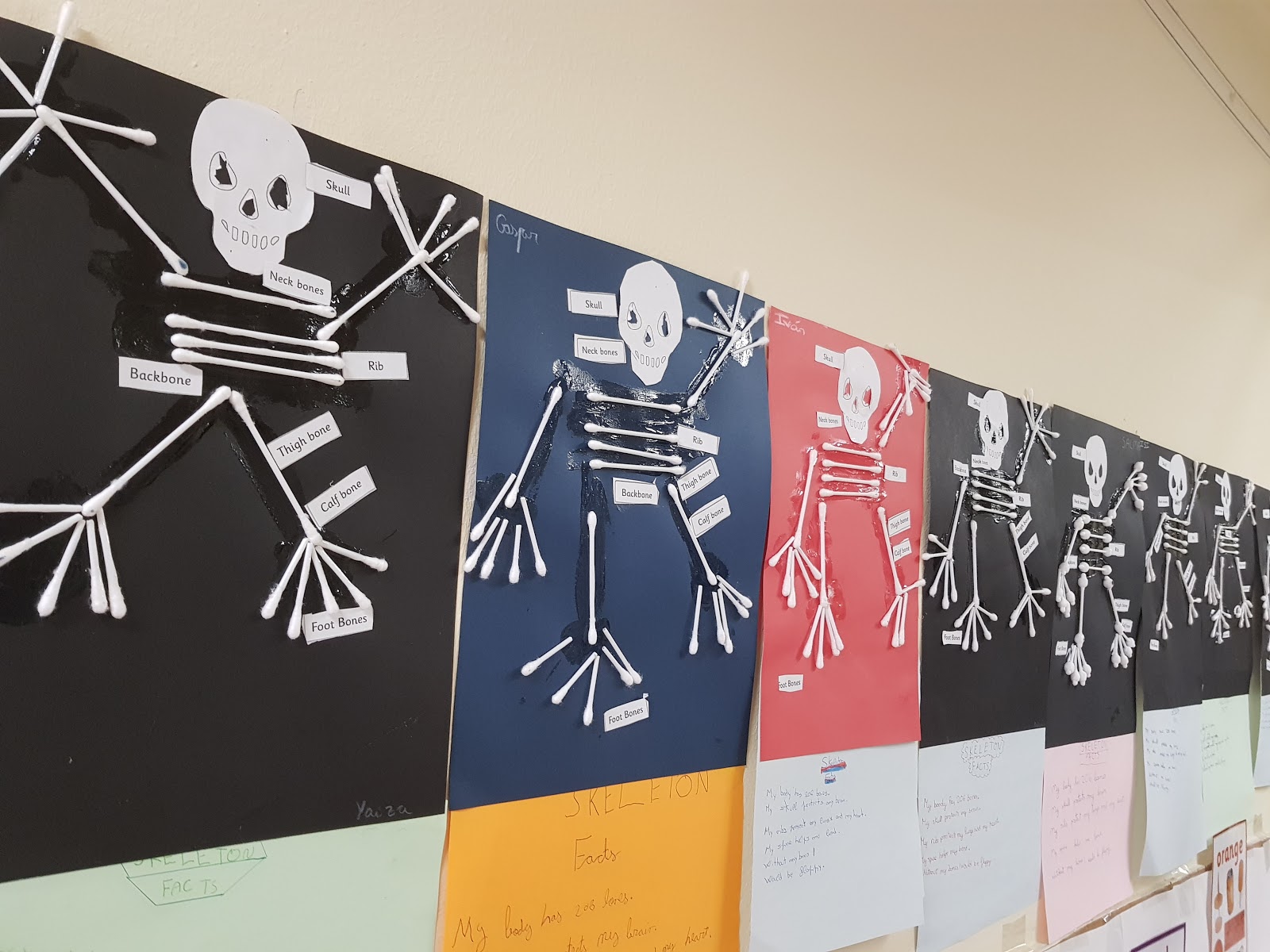
Our 4th grade project was based on Skeleton Hiccups by Margery Cuyler.  
Students used cotton swabs to assemble skeletons in an action pose and then label the main bones.


To better understand the digestive system of the human body, we completed an experiment of what happens to our food after we eat. 
Using only a plastic bag, a banana, crackers, and colored water, we were able to recreate the process of digestion, with the plastic bag representing our stomach. 
In the plastic bag, we crushed the banana and crackers together to represent chewing.
We then added the colored water to the mixture to serve as the gastric juices for digestion.


http://www.visualesl.com/pages/en/tests/393/basic_body_organs

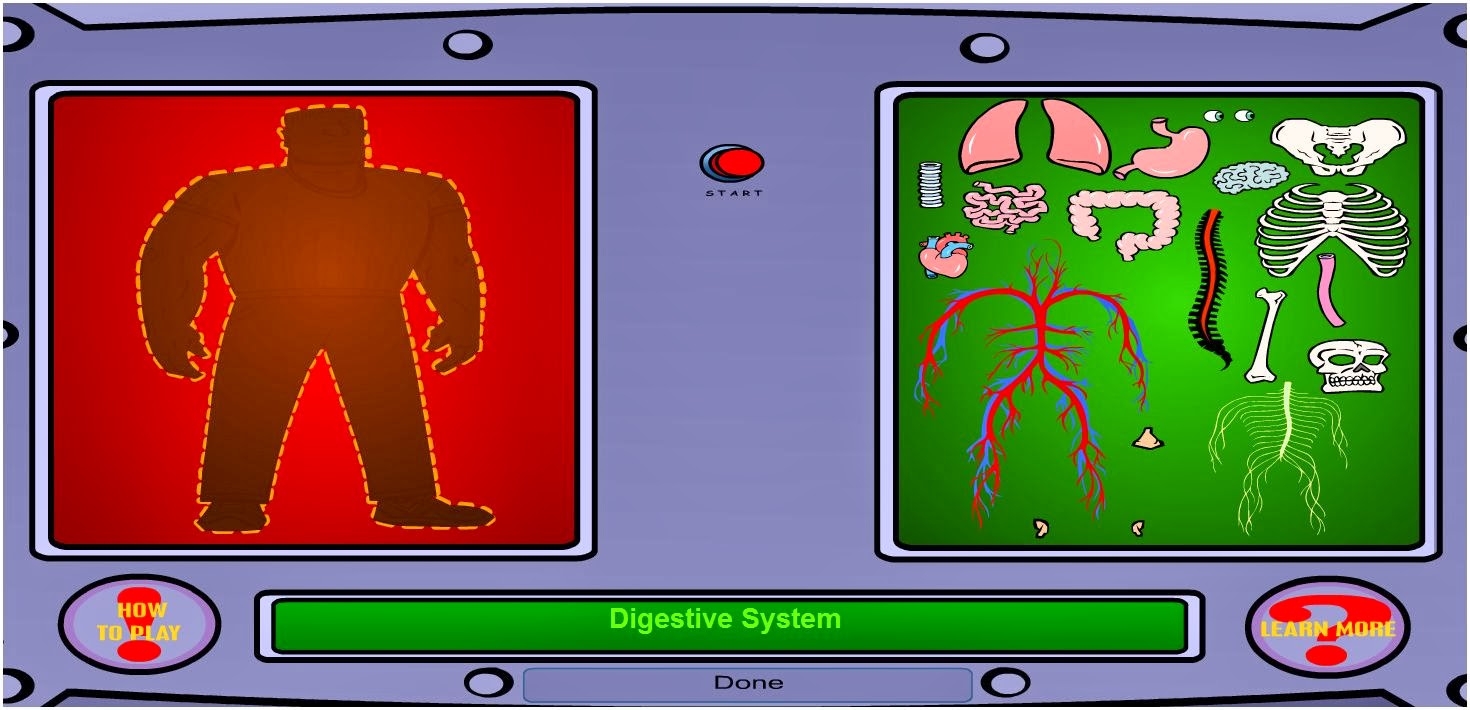
  • Haz clic en cualquier parte del dibujo para empezar
  • Arrastra las palabras a su lugar correcto

http://sciencenetlinks.com/interactives/systems.html

  • Ayuda a Arnold a recuperar sus organs


http://www.bbc.co.uk/schools/scienceclips/ages/9_10/keeping_healthy_fs.shtml


Más fotos aquí
Click on Stomach lab 25-4-16
To better understand the digestive system of the human body, we completed an experiment of what happens to our food after we eat. Using only a plastic bag, a banana, crackers, and colored water, we were able to recreate the process of digestion, with the plastic bag representing our stomach. In the plastic bag, we crushed the banana and crackers together to represent chewing. We then added the colored water to the mixture to serve as the gastric juices for digestion.
Watch the photos to see the results! They are quite interesting.
Organs
http://www.sheppardsoftware.com/health/anatomy/digestion/digestion_game_1.htm
Click on the image
And what happens to food inside the digestive system? Let´s see:

http://kitses.com/animation/swfs/digestion.swf
Click on the image
We created  fake lungs using a plastic bottle, straws, a glove and two balloons. We were able to see how the lungs take in air with the help of the diaphragm


- My experiment was about……………………........................................

- MATERIALS I used: …………………………………………………………………

- THIS IS WHAT I DID
In this model, the straws represent your t_ _ _ _ _ _ and bronchial tubes, the balloons represent your l_ _ _ _
The bottle is your c_ _ _ _, and the glove is your d_ _ _ _ _ _ _ _, a sheet of muscles under your chest.

- THIS IS WHAT I LEARNT When you breathe in, or inhale, your diaphragm contracts and moves down, creating more space in your chest for your lungs to fill with air. When you breathe out, or exhale, your diaphragm relaxes back up. The space inside your chest gets smaller forcing the air out of your lungs.

- PICTURE OF WHAT I DID

You are going to learn how to work with AR  (augmented reality).
It´s very easy and simple. Just follow these steps:

  • Open the web link: http://www.learnar.org/ 
    http://www.learnar.org/


  • Press "AR intro: Demo" 
  • Press  "Permitir' or 'Allow"
  • Show the marker to the webcam and enjoy!!


    Previous PostEntradas antiguas Inicio